
AFRAID OF MAKING
A BAD HIRE?
Is IT keeping you overworked &
under-supported?
GET UNSTUCK!
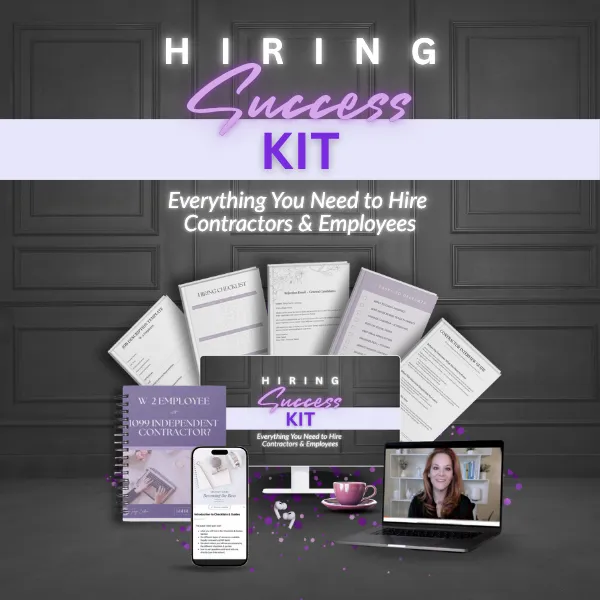
GET THE HIRING SUCCESS KITS NOW!
AFRAID OF MAKING
A BAD HIRE?
Is IT keeping you overworked &
under-supported?
GET UNSTUCK!
GET THE HIRING SUCCESS KITS NOW!
AFRAID OF MAKING
A BAD HIRE?
Is IT keeping you
overworked &
under-supported?
GET UNSTUCK!
GET THE HIRING
SUCCESS KITS NOW!
AFRAID OF MAKING
A BAD HIRE?
Is IT keeping you overworked &
under-supported?
GET UNSTUCK!
GET THE HIRING SUCCESS KITS NOW!

LEGACY BUSINESS BUILDERS • December 2, 2025
What Your Business Is Telling You About The Way You Lead
LEGACY BUSINESS BUILDERS • July 1, 2025
Why Your Hires Don't Work Out (And What to Do Differently)


Hey There, I'm
Taryn Cadena
Hey There, I'm
Taryn Cadena
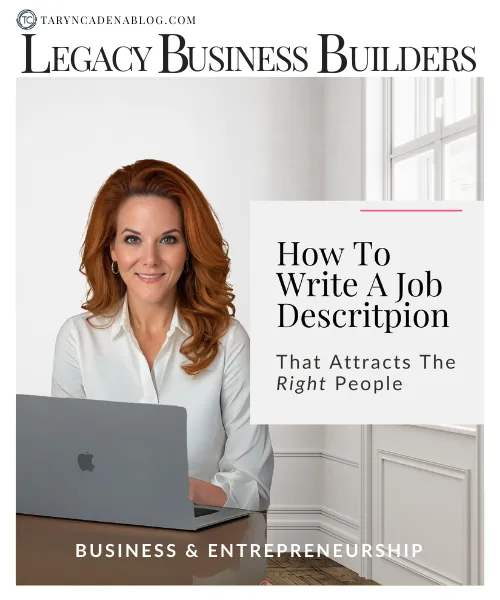
I turned years of HR experience into simple, affordable systems to help women entrepreneurs build effective teams and step into their CEO power! I love sugary coffee, early mornings, and brainstorming new ideas with amazing women. I’m happiest in yoga pants, snuggled with my laptop and my dog Napper. My mission? To help women entrepreneurs create powerhouse teams, lead like CEOs, and build highly successful businesses that last!

Hey There, I'm
Taryn Cadena
I turned years of HR experience into simple, affordable systems to help women entrepreneurs build effective teams and step into their CEO power! I love sugary coffee, early mornings, and brainstorming new ideas with amazing women. I’m happiest in yoga pants, snuggled with my laptop and my dog Napper. My mission? To help women entrepreneurs create powerhouse teams, lead like CEOs, and build highly successful businesses that last!
LEGACY BUSINESS BUILDERS • December 2, 2025
Hiring your first or next employee? You might feel tempted to skip the job description and just “talk through it” during interviews.
But here’s the truth:
Skipping the job description isn't saving you time. It's setting you up for confusion.
A vague job post might help you find a person, but it won’t help you find the right fit. And once they’re on your team, it’s incredibly hard for that hire to succeed if you never clearly defined what you wanted in the first place.
Reality for growth's sake: If you don’t know exactly what you want someone to do, how will they know if they’re doing it well?
And more importantly, how will you know if they’re worth the payroll costs?
Skipping the job description is often the first step down a path that leads to miscommunication, unmet expectations, and high turnover. It’s not about being overly formal. It’s about being clear with yourself, and with your team.
Let’s break down how to write a job description that actually helps you get what you want from your employee, and supports your business long after the hire is made.
Why Most Small Business Job Descriptions Miss the Mark
A lot of founders wing it.
They copy-paste something they found online. Or they post a quick note in a Facebook group that says, “Looking for help with admin tasks — DM me.”
The problem?
That approach might get you responses, but it won’t help you filter for the right person. And it definitely won’t set up a clear working relationship.
Here's what a great job description actually does:
Clarifies what the role is and why it matters
Attracts the right people — and repels the wrong ones
Gives you something to refer back to during onboarding, training, and reviews
Builds trust by showing that you know what you’re doing as a leader
Free up your time for CEO-level tasks
Help you hit revenue goals faster
Improve client experience and retention
Reduce burnout and business stagnation
Before you post a job ask yourself:
What does the business need most?
Do I need help generating revenue?
Do I need more efficiency behind the scenes?
The Real Cost of Skipping It
Let’s be honest, this is about more than just paperwork.
Here’s what happens when you skip the job description:
Your eager new hire shows up ready to help, but they aren't sure exactly what you want.
You think you explained it clearly. But without a written job description, your version of “clear” may be very different from theirs. They’re left guessing, and trying to please you, but not quite landing it.
You don't get what you expected, and it's frustrating.
When you’ve made a mental list of what success looks like, but your hire can’t read your mind, tension builds fast. You start to feel like you’re repeating yourself. They start to feel like they’re failing.
Eventually, it feels like the hire "isn't the right fit."
But in most cases, the problem isn't the person. It's a lack of clarity.
Lack of clarity is one of the top reasons new hires fail.
The job description is your chance to prevent that before it starts.
Use Your Job Description Beyond Hiring
A lot of people treat job descriptions like something you write once, post, and forget.
But in reality, this one document can become a foundational tool in your leadership. It helps you:
Define success for the role
Create onboarding and training plans
Structure performance reviews
Hold your team accountable
Delegate with confidence
The goal isn't just hiring a warm body. It's getting the support you actually wanted when you decided to bring someone onto your team.
When your job description is clear and thoughtful, your new employee is more likely to succeed, and you're more likely to feel confident in your role as a leader.
What to Include in a Great Job Description
Before you start writing, there’s one thing every business owner needs to know:
Every state has different requirements
that align with state-specific laws.
Many states now require wage disclosures, nondiscrimination statements, or other specific language in job ads.
Make sure you know what’s required in your state before you post.
Here’s what a great job description includes:
1. Job Title and Role Summary
Use a straightforward title that matches the responsibilities of the role. Then write a short paragraph that explains the purpose of the position in your company.
Example:
The Operations Coordinator supports client communications, project timelines, and daily admin tasks related to scheduling, file management, and service delivery.
2. Key Responsibilities
List 5–7 core duties this person will perform regularly. Use action words and be specific.
Don’t write: “Manage inbox.”
Do write: “Respond to client emails within 24 hours using company templates and guidelines.”
3. Required Skills, Experience and Education
Keep this realistic. What do they truly need to know or be able to do on Day 1? Always make sure your required skills, experience and education truly align with what is needed to do the job, or your requirement could be percieved as discriminatory!
Example:
Does it really take an undergraduate degree to be qualified to answer the phones for your organization? If not, you are probably better off leaving that requirement off the job description.
4. Personal Attributes for Success
Attributes are just as important as job duties.
Studies show that 90% of jobs that don’t require a license or certification can be learned. What matters most is whether someone has the personal traits to succeed in your specific environment.
Think about things like:
Drive
Commitment
Leadership
Grit
Example:
Someone with great experience but poor time management might struggle in a remote role.
On the other hand, a self-driven, accountable person with the right attitude can often learn the systems quickly and thrive.
Be sure to only list attributes that are clearly tied to being able to be successful in the job itself, not personal preferences or assumptions.
5. Work Schedule, Location, and Pay
Clarify whether this is part-time, full-time, contract, or project-based.
Note where the work takes place (remote, in-office, hybrid), and whenever possible, include a pay range.
Many states now require this in job posts, and even when it’s not required, it builds trust.
Final Thoughts
Writing a great job description is one of the most powerful tools you have as a business owner, especially if you’re building your team from the ground up.
It helps you:
Get aligned with what the role actually needs
Set expectations before day one
Make stronger, more confident hiring decisions
Build internal systems that grow with your business
Don’t skip this step.
It’s not just a job post, it’s your leadership in writing.
Need Help Writing Yours?
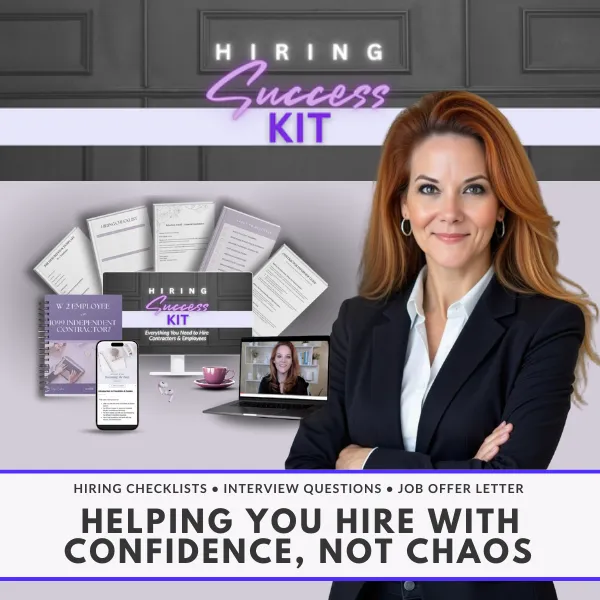
My Hiring Kit includes a fillable Job Description Template, a sample job ad, and the exact checklist I use with clients to define new roles and hire strategically.
Hiring your first or next employee? You might feel tempted to skip the job description and just “talk through it” during interviews.
But here’s the truth:
Skipping the job description isn't saving you time. It's setting you up for confusion.
A vague job post might help you find a person, but it won’t help you find the right fit. And once they’re on your team, it’s incredibly hard for that hire to succeed if you never clearly defined what you wanted in the first place.
Reality for growth's sake: If you don’t know exactly what you want someone to do, how will they know if they’re doing it well?
And more importantly, how will you know if they’re worth the payroll costs?
Skipping the job description is often the first step down a path that leads to miscommunication, unmet expectations, and high turnover. It’s not about being overly formal. It’s about being clear with yourself, and with your team.
Let’s break down how to write a job description that actually helps you get what you want from your employee, and supports your business long after the hire is made.
Why Most Small Business Job Descriptions Miss the Mark
A lot of founders wing it.
They copy-paste something they found online. Or they post a quick note in a Facebook group that says, “Looking for help with admin tasks — DM me.”
The problem?
That approach might get you responses, but it won’t help you filter for the right person. And it definitely won’t set up a clear working relationship.
Here's what a great job description actually does:
Clarifies what the role is and why it matters
Attracts the right people, and repels the wrong ones
Gives you something to refer back to during onboarding, training, and reviews
Builds trust by showing that you know what you’re doing as a leader
The Real Cost of Skipping It
Let’s be honest, this is about more than just paperwork.
Here’s what happens when you skip the job description:
Your eager new hire shows up ready to help, but they aren't sure exactly what you want.
You think you explained it clearly. But without a written job description, your version of “clear” may be very different from theirs. They’re left guessing, and trying to please you, but not quite landing it.
You don't get what you expected, and it's frustrating.
When you’ve made a mental list of what success looks like, but your hire can’t read your mind, tension builds fast. You start to feel like you’re repeating yourself. They start to feel like they’re failing.
Eventually, it feels like the hire "isn't the right fit."
But in most cases, the problem wasn’t the person. It was the lack of clarity.
Lack of clarity is one of the top reasons new hires fail.
The job description is your chance to prevent that before it starts.
Use Your Job Description Beyond Hiring
A lot of people treat job descriptions like something you write once, post, and forget.
But in reality, this one document can become a foundational tool in your leadership. It helps you:
Define success for the role
Create onboarding and training plans
Structure performance reviews
Hold your team accountable
Delegate with confidence
The goal isn't just hiring a warm body. It's getting the support you actually wanted when you decided to bring someone onto your team.
When your job description is clear and thoughtful, your new employee is more likely to succeed, and you're more likely to feel confident in your role as a leader.
What to Include in a Great Job Description
Before you start writing, there’s one thing every business owner needs to know:
⚠️ Every state has different requirements that align with state-specific laws.
Many states now require wage disclosures, nondiscrimination statements, or other specific language in job ads.
Make sure you know what’s required in your state before you post.
Here’s what a great job description includes:
1. Job Title and Role Summary
Use a straightforward title that matches the responsibilities of the role. Then write a short paragraph that explains the purpose of the position in your company.
Example:
The Operations Coordinator supports client communications, project timelines, and daily admin tasks related to scheduling, file management, and service delivery.
2. Key Responsibilities
List 5–7 core duties this person will perform regularly. Use action words and be specific.
Don’t write: “Manage inbox.”
Do write: “Respond to client emails within 24 hours using company templates and guidelines.”
3. Required Skills and Experience
Keep this realistic. What do they truly need to know or be able to do on Day 1? Always make sure your required skills, experience and education truly align with what is needed to do the job, or your requirement could be perceived as discriminatory!
Example:
Does it really take an undergraduate degree to be qualified to answer the phones for your organization? If not, you are probably better off leaving that requirement off the job description.
4. Personal Attributes for Success
Attributes are just as important as job duties.
Studies show that 90% of jobs that don’t require a license or certification can be learned. What matters most is whether someone has the personal traits to succeed in your specific environment.
Think about things like:
Drive
Commitment
Leadership
Grit
Example:
Someone with great experience but poor time management might struggle in a remote role.
On the other hand, a self-driven, accountable person with the right attitude can often learn the systems quickly and thrive.
Be sure to only list attributes that are clearly tied to being able to be successful in the job itself, not personal preferences or assumptions.
5. Work Schedule, Location, and Pay
Clarify whether this is part-time, full-time, contract, or project-based.
Note where the work takes place (remote, in-office, hybrid), and whenever possible, include a pay range.
Many states now require this in job posts, and even when it’s not required, it builds trust.
Final Thoughts
Writing a great job description is one of the most powerful tools you have as a business owner, especially if you’re building your team from the ground up.
It helps you:
Get aligned with what the role actually needs
Set expectations before day one
Make stronger, more confident hiring decisions
Build internal systems that grow with your business
Don’t skip this step.
It’s not just a job post, it’s your leadership in writing.
Need Help Writing Yours?
My Hiring Kit includes a fillable Job Description Template, a sample job ad, and the exact checklist I use with clients to define new roles and hire strategically.
Hey There, I'm
Taryn Cadena
I turned years of HR experience into simple, affordable systems to help women entrepreneurs build effective teams and step into their CEO power! I love sugary coffee, early mornings, and brainstorming new ideas with amazing entrepreneurs. I’m happiest in yoga pants, snuggled with my laptop and my dog Napper. My mission? To help women entrepreneurs create powerhouse teams, lead like CEOs, and build highly successful businesses that last!

A FEW OF MY FAVORITE TOOLS
01. Jazz HR
If you're posting jobs on multiple boards, save yourself time, money and major stress by using a hiring platform designed for small business hiring.
02. Talent LMS
My go-to for creating easy onboarding experiences and training programs that grow with your business.
If you're a small business owner who's ready to stop winging it when it comes to hiring, you're in the right place.
But hiring isn't just about filling a seat. It's about building a foundation for sustainable growth.
This post walks you through the exact hiring plan I use with my clients to help them scale their business confidently.
Whether you're making your first hire or trying to fix past hiring mistakes, this simple but strategic approach can change everything.
Why Your Hiring Strategy Matters More Than You Think
Most entrepreneurs wait too long to hire, or they make rushed decisions when things get overwhelming.
You’re missing key pieces of information that would have helped you make a better decision up front.
Hiring the right person in the right role can:
Free up your time for CEO-level tasks
Help you hit revenue goals faster
Improve client experience and retention
Reduce burnout and business stagnation
And yet, so many founders struggle because they:
Hire based on personality instead of skill
Skip onboarding and hope for the best
Confuse “help” with actual “fit”
Sound familiar? If so, this hiring plan is for YOU!
STEP 1: Identify the Right Position for Right Now
Hey There, I'm
Taryn Cadena
I turned years of HR experience into simple, affordable systems to help women entrepreneurs build effective teams and step into their CEO power! I love sugary coffee, early mornings, and brainstorming new ideas with amazing women. I’m happiest in yoga pants, snuggled with my laptop and my dog Napper. My mission? To help women entrepreneurs create powerhouse teams, lead like CEOs, and build highly successful businesses that last!
A FEW OF MY FAVORITE TOOLS
01. Jazz HR
If you're posting jobs on multiple boards, save yourself time, money and major stress by using a hiring platform designed for small business hiring.
02. Talent LMS
My go-to for creating easy onboarding experiences and training programs that grow with your business.
OTHER POSTS
Copyrights 2025 | Honestly Branded HR™ | Taryn Cadena™ |Terms & Conditions